AW10: With Liberty and Justice for All: Multi- and Translinguistic Advocacy and Activism
Wednesday, Mar 04, 2026
1:30 – 5:00 pm
Location: Room 202, Huntington Convention Center
Sponsored by the CCCC Second Language Writing Standing Group (SLW)
Roundtable C: Inaccessible Accessibility Principles: ETS’s Performative Allyship
Roundtable led by Yuan Zhao (University of Louisville)
Activity
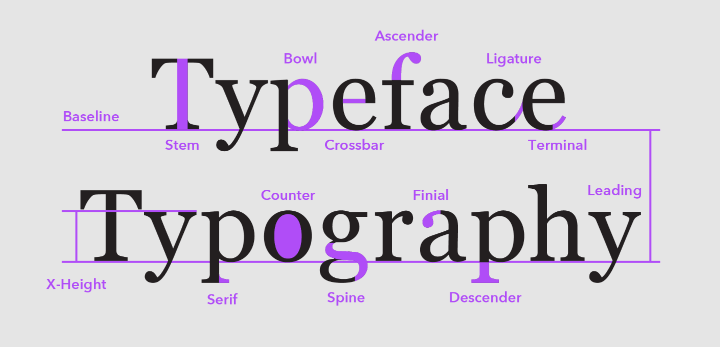
Personalized Reading Environment Settings
Please follow this Google Form to see activity instructions.
Context
Assessment Institutions and Performative Allyship
In 2009, the National Accessible Reading Assessment Projects (NARAP) funded by the U.S. Department of Education published a report–Accessibility Principles for Reading Assessments. Accessibility Principles demonstrates a holistic and advanced vision of how accessible reading assessments should look like.
ETS actively participated in drafting the document.
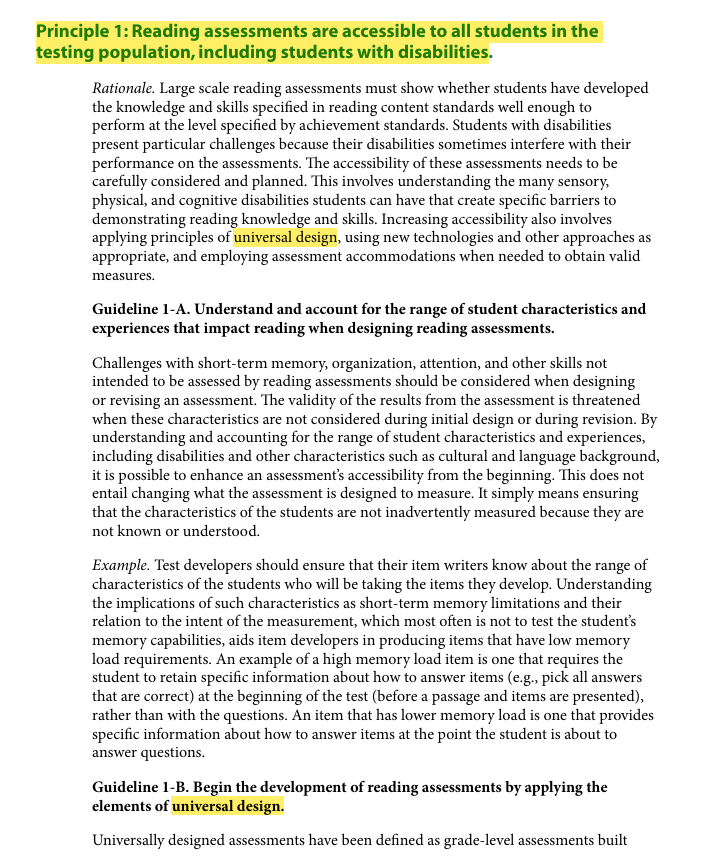
Accessibility Principles advocated universal design principles, that is, design for all, design for everyone. The audience of this Principles include but not limited to (1) personnel in state assessment offices, (2) test developers, and (3) other audiences who may be interested in assessments.
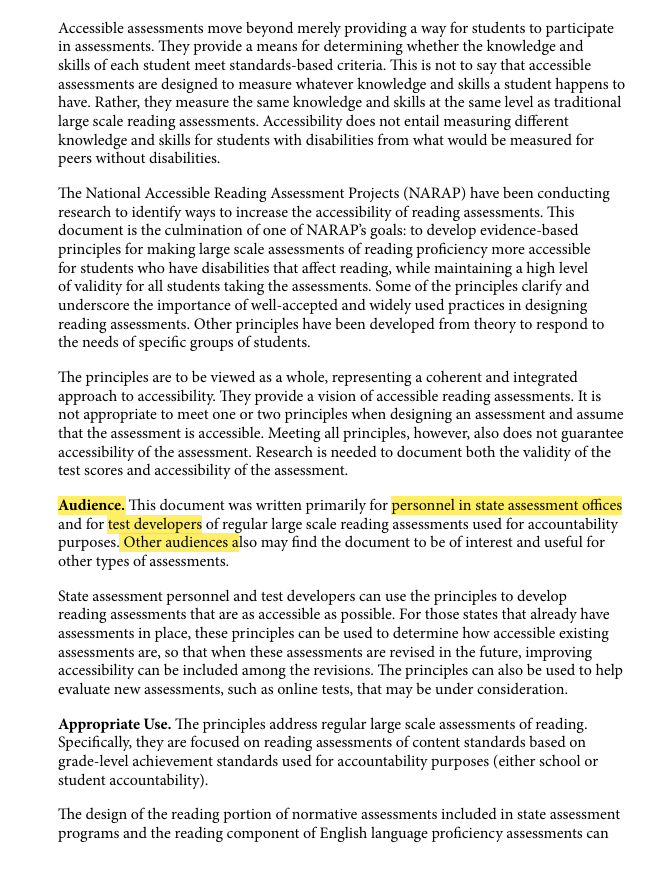
However, when it comes to ETS’s own test TOEFL– one of the largest English language proficiency assessments in the world, it fails to integrate the accessibility principles in many regards.
Here are some complaints about TOEFL typefaces from international students.
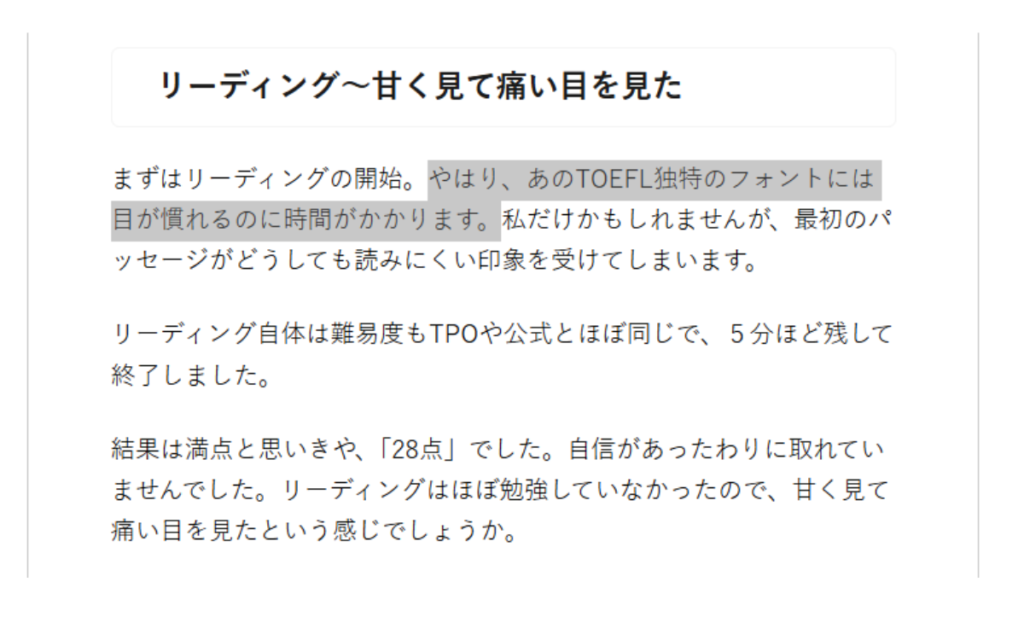
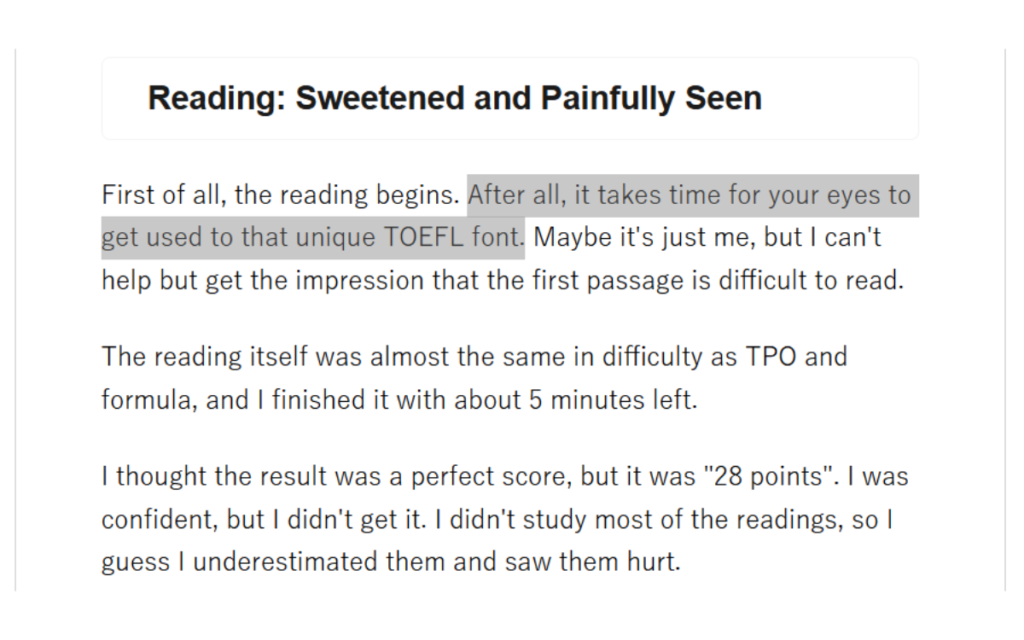

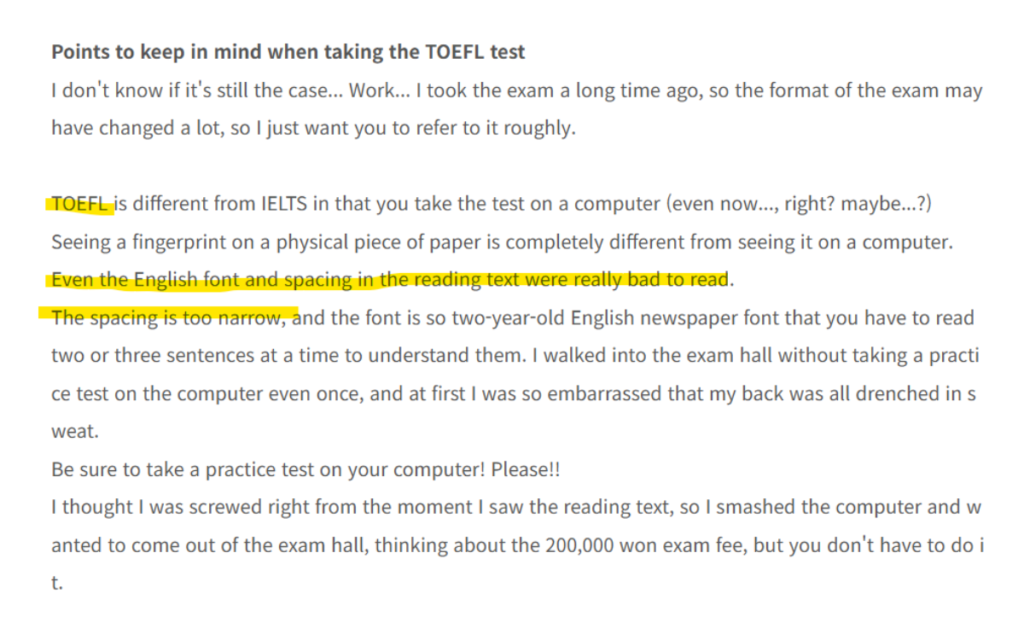
Chinese internet users use Zhihu.com (a Q&A community modeled after Quora) to discuss why typeface the TOEFL uses in the real test. Chinese test takers wanted to simulate the real exam settings.
Even though one of TOEFL’s document–TOEFL iBT Bulletin Supplement mentions available accommodation for test takers, the application requirements are very strict and only apply to test takers with diagnosed disabilities.

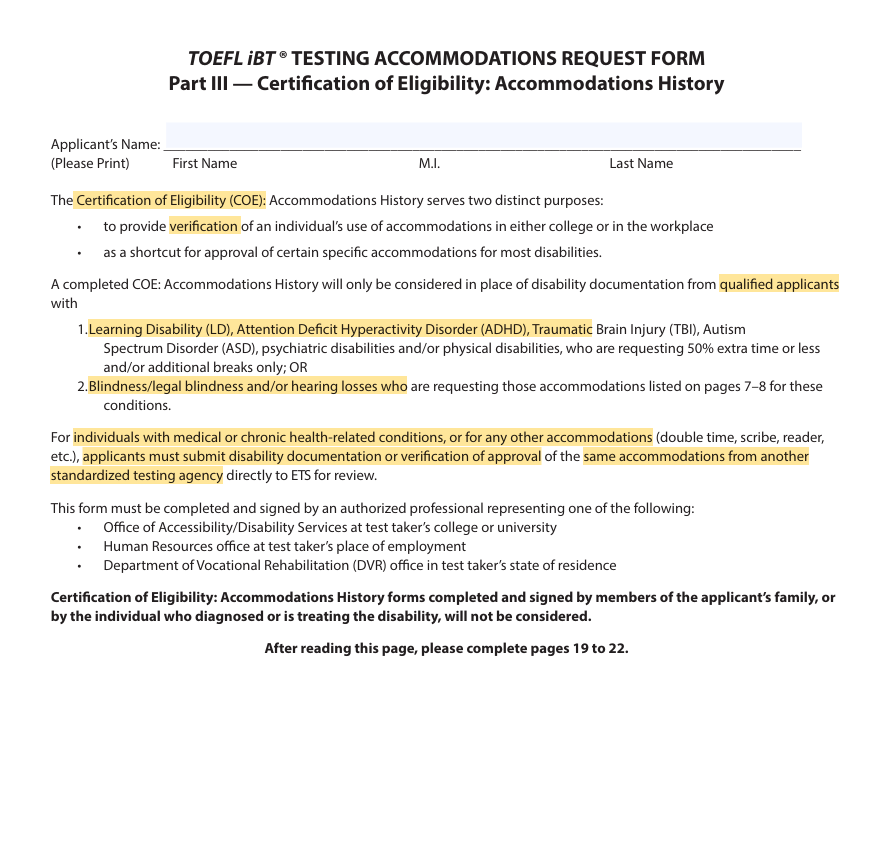
I thus suspect if ETS’s participation in Accessibility Principles drafting is in fact a revelation of performative allyship–showing support for social justice, but more strongly motivated by self-promotion and corporate progressive credibility than by a genuine concern for the disadvantaged group.
Discussions
- From international students’ perspectives, what challenges do they need to encounter and overcome?
- Why does the ETS engage in performative allyship?

Advocacy
- For university admissions, diversified language assessments should be accepted.
- What are your university’s language assessment policies in admission?
- At technical level, more research on language assessments.
- What do language assessment studies focus on recently?
- At the socio-economic level, more research on how language assessment institutions engage in profit-gaining activities.
- What kinds of research can be conducted?
- Methodologies?
